about
Engineer with taste,
not artist who codes.
Open to conversations about senior and mid-level engineering roles
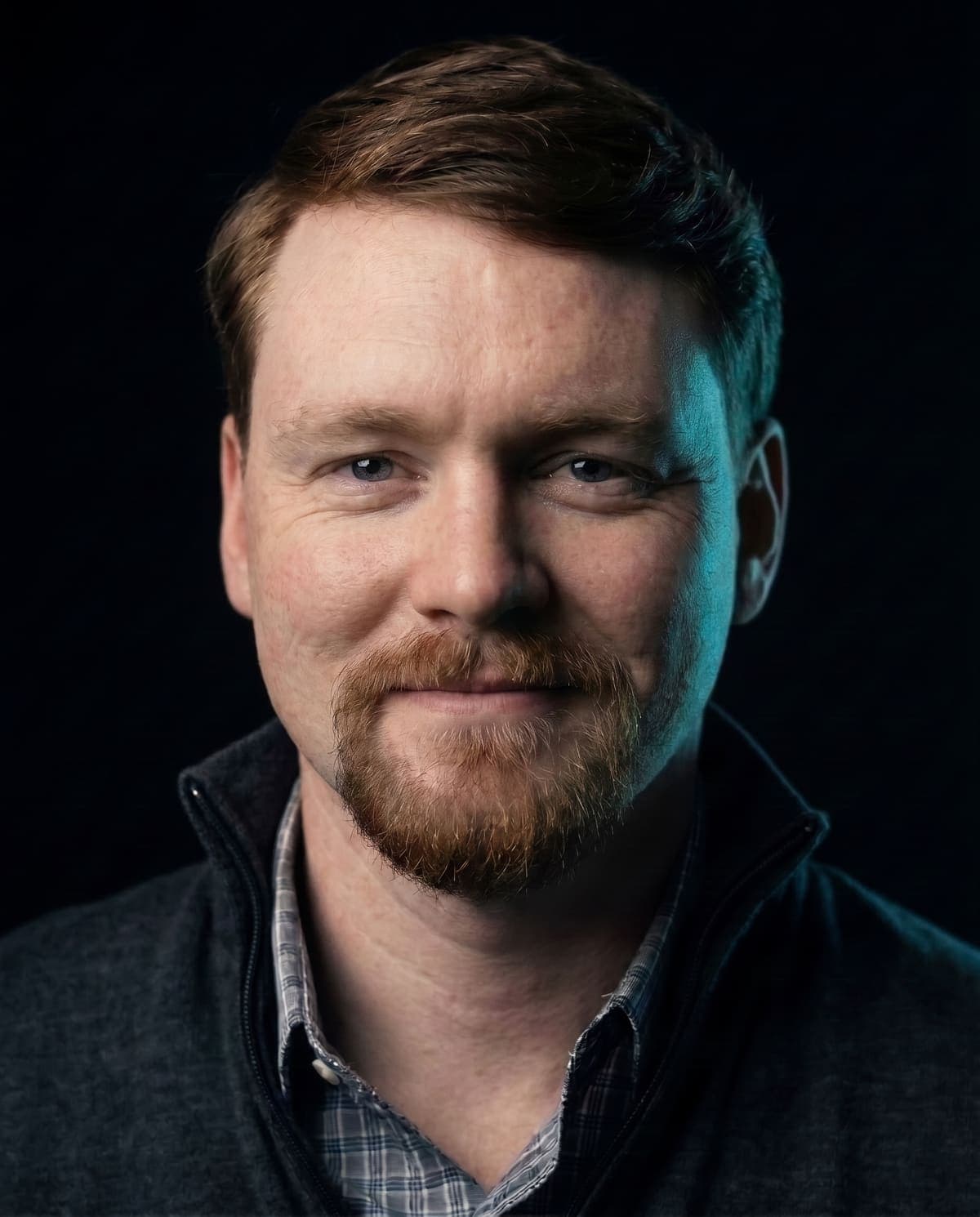
I'm Kevin Murphy, a senior full-stack software engineer in Tempe, Arizona. I've written React professionally since 2018: almost three years building the ASU Mobile App in React Native as full-time ASU staff, then more than five years at Deloitte on frontends for systems people depend on without ever thinking about them: React and TypeScript for IRS.gov tax payments and Michigan's unemployment insurance portal, and a Salesforce Lightning Web Components app for the Federal Reserve's FedNow bank onboarding.
These days I work across the whole stack: Node.js and NestJS on AWS, Postgres, and the React frontend on top. Outside the day job I build and run two products under my own LLC, and I ship open-source projects that put AI features into real interfaces. Claude Code is part of how I work every day.
I came to engineering sideways. I have a BA in cultural anthropology, and my first job in tech was a 2015 Smithsonian internship updating the Folkways digital archive, in the building that held the original vinyl pressing of This Land Is Your Land. After two solo freelance builds and almost three years at Arizona State, I joined Deloitte in 2021 as a mid-level engineer and was promoted to senior.
The anthropology never left. It shows up as attention to what people actually do with software, which is rarely what the spec says they will do. This site is a fair place to judge whether that holds up.
Current certifications: AWS Developer Associate and AWS Solutions Architect Associate.
what I bring
The case for hiring me, in five lines.
craft
Quality is part of the job.
Strict TypeScript, accessibility built in from the start, performance budgets I hold to, and evals behind anything that uses AI. This site is the easiest place to check. I don’t treat the interface or the AI tooling as an afterthought, because the people using them don’t.
scale
Production frontend at federal scale.
Since 2021 at Deloitte I’ve shipped frontends for systems most people use without knowing their names: React and TypeScript for the IRS.gov tax-payment experience and Michigan’s unemployment insurance modernization, and the Federal Reserve’s FedNow bank onboarding on Salesforce Lightning Web Components. Complex state, heavy load, shared design systems, and release trains under audit. Mistakes there are expensive, so the work had to hold.
lens
An anthropology degree, still in use.
I studied cultural anthropology, and the habits stuck: patience, watching before deciding, and noticing the gap between what people say and what they do. It never comes up in a coding screen. It comes up all the time once real people use the product.
tooling
Claude Code is my daily driver.
I’ve built with agentic coding tools since they were rough, and I work spec-first: write the decision down, let the agent build inside it, and let the tests and evals decide when it’s done. I have opinions about where this is going, and the projects on this site are where I test them.
depth
One engineer, the whole stack.
TypeScript, React, React Native, Next.js, Node.js, NestJS, Postgres, AWS, and Vercel. I can take a feature from the data model to the screen without handing it off. With today’s AI tooling, that lets a small team ship at a big team’s quality bar.
what I'm looking for
The shape of the next role.
work
Owning a feature from the database to the screen.
Senior or mid-level full-stack and product engineering roles where one engineer can hold the data model, the API, the cloud it runs on, and the interface together, including the AI features and the evals behind them. FedNow, IRS.gov, and Michigan UI taught me what real stakes feel like. I want that bar wherever I land next.
team
Stable teams with real users and a quality bar.
Production software with people depending on it, a team that reviews work and ships on a cadence, and leadership that treats accessibility, performance, and correctness as part of the job rather than polish at the end. Industry, company size, and whether AI is the product matter less than those three things.
format
Remote, hybrid, or in-person. All three work.
Years remote-first at Deloitte coordinating with offshore teammates in India and onshore colleagues across the country, so distributed delivery is routine. Based in Tempe; hybrid anywhere in the Phoenix area is easy, and I would relocate in the U.S. for the right team.
commonly asked
Questions, answered straight.
- Who is Kevin Murphy?
- Kevin Murphy is a senior full-stack software engineer based in Tempe, Arizona. He has written React professionally since 2018: almost three years on the ASU Mobile App in React Native and AWS, then more than five years at Deloitte on federal-scale frontends: React and TypeScript for IRS.gov and Michigan unemployment insurance, and Salesforce Lightning Web Components for the Federal Reserve FedNow onboarding. He also works across the backend in Node.js, NestJS, AWS, and Postgres, and builds applied AI features in open source. He holds a BA in cultural anthropology from the University of Vermont.
- What does Kevin Murphy do?
- Kevin builds production software end to end, from the data model and API to the interface, including AI features and the evals behind them. Outside his day job he builds and runs two products under his LLC, Culmination Digital: SoberMark, a national addiction-treatment directory built from public data, and SoloSteady, an income summary for self-employed mortgage applicants. His open-source projects include tablesalt (a CSV agent where the answer is the UI), streamfield (a React library for AI streams that do not look broken), grant-pilot (a multi-turn agent over federal grant data), fedbench (an LLM eval harness for grounded Q&A), fieldops-mcp (an MCP tool surface designed for agents), and mdx-corpus (a tiny npm package that turns an MDX directory into a retrieval-ready corpus).
- Where has Kevin Murphy worked?
- Kevin has worked at Deloitte (2021 to present, promoted to senior in 2023) leading frontend on federal-scale systems including the Federal Reserve FedNow onboarding portal, IRS.gov payment surfaces, and the State of Michigan unemployment insurance modernization. Before Deloitte he spent three years at Arizona State University as full-time staff on the ASU Mobile App using React Native and AWS, did two solo freelance SaaS builds during the pandemic, and started his career at the Smithsonian Institution updating the Folkways digital archive.
- What is Kev-O?
- Kev-O is a retrieval-grounded chatbot that answers from Kevin's own writing, deployed on his portfolio site at kev-o.kevinmurphywebdev.com and as inline punch-ins on individual blog posts and case studies. It streams Claude through the Vercel AI SDK, with hybrid retrieval (BM25 plus a Voyage cross-encoder rerank) over a corpus built from the MDX content on the same site. The infrastructure (corpus builder, retrieval pipeline, page-aware context injection) is documented in the "Building Kev-O" post.
- What kind of roles is Kevin Murphy open to?
- Kevin is open to conversations about senior and mid-level full-stack and product engineering roles, remote or in the Phoenix area, at teams that ship production software with real users. He prefers contexts where one person can own a feature end to end (design, engineering, evals, observability) rather than narrow track roles.
- How do I contact Kevin Murphy?
- Email is the best path: kmurphywebdev@gmail.com. He is also on LinkedIn (midimurphdesigns), GitHub (midimurphdesigns), X (midimurph), and Bluesky (midimurph.bsky.social). His contact page at kevinmurphywebdev.com/contact has the canonical links.
off the clock